Z To A
Music, food, travel, and a little bit of everything else
Category Archives: Thought
A Good read on the obstacle of underachieving in life
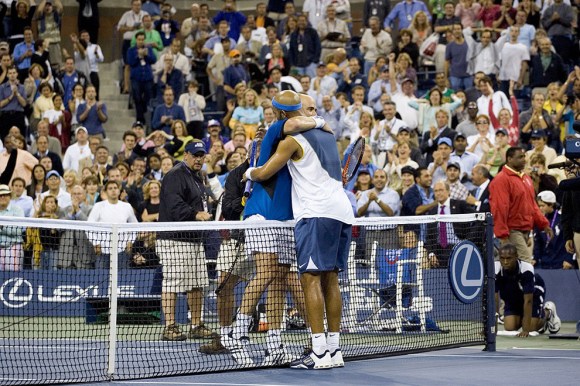
“These are questions everyone has to figure out a good answer for. And there are small, mostly hidden parts of all of us that never really let go of the idea that the answer is simply that we were born for a more glorious destiny and there has been some sort of mistake, which is why Bruce Springsteen songs are popular. In any case, most people get decades to coherently balance their ambitions and their happiness. In some sense, Blake had the five minutes between his loss and his press conference. We’ve all admitted to someone we respect that we haven’t lived up to their expectations. Imagine admitting that to hundreds of thousands of fans who have hopes for you because you are better than them, because you are their avatar, livin’ the dream.”
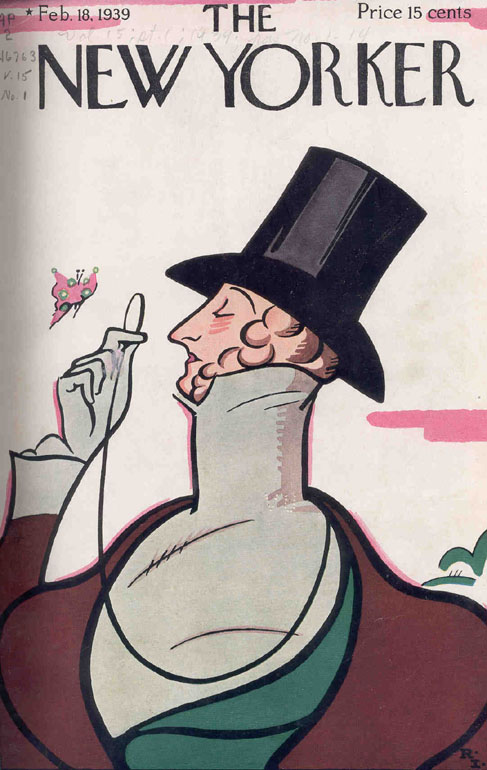
Eisenhower 1954, Obama 2013: A piece from The New Yorker
”
“Eisenhower understood, as Obama surely does, how America’s role can change indelibly in a moment; that sending a single air strike, or soldier or, as happened with later Administrations, thousands of soldiers, binds us to the outcome.”
RECAP OF BREAKING BAD (FINAL SEASON EPISODE 2)
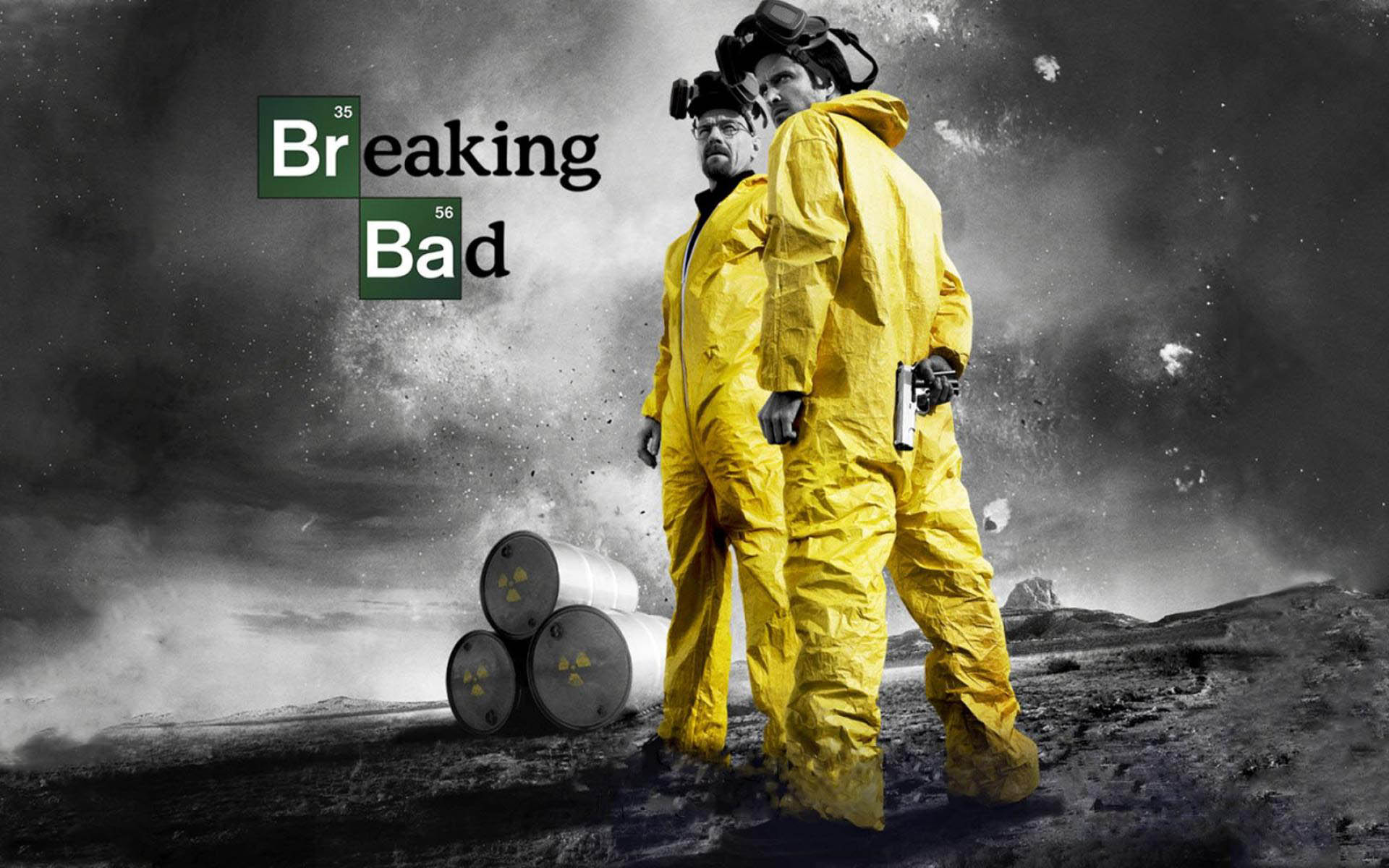
After another week of great anticipation, Breaking Bad returned with 6 episodes left. Last night’s episode was one of those emotional transitional episodes, that every season needs. It wasn’t filled with action, OH SHIT moments, or heart stopping moments. Last night’s episode was a gripping one, exploring the emotions of the family and altered relationships (where the hell is Walt Jr,!?!). Hank continues his emotional struggle. He can’t quite fathom how his own brother-in-law managed to undertake the legend of Heisenburg, all under his nose. It is no doubt embarrassing and gut wrenching for him. After Walt leaves, Hank calls Skylar to meet him at a local café, where he pushes her to admit and crucify Walt. Skylar, who has proven to be surprisingly loyal, refuses to do so, and smartly refuses to speak without a lawyer. Later Marie and Hank go over to the White’s home, and this is when the episode becomes grippingly emotional. Marie is stunned, angered, and in disbelief that her sister hid the secrets of their life for so long, while jeopardizing the entire family. I think my favorite moment of the show, and maybe most emotional part, was when Walt woke up from his collapse. He tells Skylar that he had buried the money, and agreed to turn himself in. His only request was that she keep the money and take care of the children. This one scene encapsulates all of Walt’s struggles from the first season, to the current episode. We get a glimpse of Walter White, the family man, and not Heisenberg, the ruthless killer and drug boss. Furthermore as the episode progress we learn that Lydia isn’t the innocent criminal she seemed to be previously. Once non-respected by her partners and the drug cartels, Lydia proves to be a shrewd and dangerous woman. It will be interesting to see how this plays into later episodes. The episode ends with Jesse at the police station. Obviously you can’t go around throwing stacks of money and expect someone not to notice. Next weeks episode will probably begin with Hank and Jesse. These two emotionally torn men will be face to face. Hank will no doubt press Jesse on what he knows about Walt, and I expect him to take a friendly approach. Something like a “we both know how ruthless and awful this man is, let’s get him together” tactic. Favorite line of the night: “I’ll send you to Belize.”
Laser beam memory manipulation systems!?! Check out this TED talk
Seems like we are getting closer to blurring the line between science fiction and reality. Naturally as society evolves, we would expect our innovative nature to do such a thing. Check out this TED talks. Are you ok with the thought of erasing and creating memory? What are the ethical dilemmas? Wouldn’t it be nice to forget that ex, accident, or any other awful memory of the past; or does our memory shape us and make us the beings we are? Isn’t it a necessary element of ourselves, and would we want to manipulate such a natural process. Regardless, these guys from MIT are pretty awesome. Laser beam memory manipulation systems huh.
Photo of the Day

They say a picture is worth a 1000 words. This was taken in Egypt today. People continue to live their lives as violence and protest surround them. SImply amazing.
Recap of Breaking Bad (Final Season Episode 1)
Spoiler alert! If you haven’t watched Breaking Bad yet (who are you?) you might not want to read the following post. The episode began in typical flashback fashion, thanks Lost for inspiring writers to take advantage of this tantalizing TV feature, and reminded us all immediately how much we need and missed this show. “Hi Carol”, Walter White remarked, as his neighbor dropped her groceries. After the scene, in which the house was vacant and dilapidated, graffiti of Heisenberg welcomed Walt. You immediately knew some shit went down. As the show progressed Walt claims he has gone back to his usual life, but can he really? Hank suffers a panic attack, Skylar warns Lydia to stay away, Jesse cant bare to live with himself and the “blood money”, and obviously we see Walt Jr. at the dinner table (I wonder why his character hasn’t been more developed). The episode was slow at times, but the high points reminded you how great this show really is. Jesse and his emotional turmoil once again transfixed us, and reminded us why we love him so much. Hank, who at times comes off as a meathead, has proven to have his intellectual moments and fine detective attributes. The best moment of the show, as I’m sure all will agree, were the last 5 minutes of the show. Only Breaking Bad and Vince Gilligan would have the balls to move the script forward so fast. The show could have easily waited a few weeks for the Walt and Hank confrontation, but decided to make a bold move and viewers were undoubtedly pleased, as social media exploded. Predication time! Who will die? Who will live? Who will ride into the sunset? Personally, I think that there is no way Walt survives the life he has created. One must wonder why he was reaching into his trunk, which contained some sort of automatic rife. Was he attempting to save Jesse? Was he one the run? That one scene has left us with so many questions, but that is the beauty of this show. My predication is that Lydia forces Jesse back into the drug game, because he is the only other person who knows the formula. She clearly needs purer meth, and with Walt out of the game, Jesse is her last shot. Walt, I believe, is on a mission to save Jesse, and in the process meets his fatal end. It would be an ironic and emotional scene, which would lead viewers through an emotional roller coaster. As the show evolves, we will get our answers slowly. Vince Gilligan has promised the finale will not disappoint, and at this point, who can doubt him. Just remember Hank, tread lightly!
These guys clearly had Walter White as their chemistry professor.
Before I write any further, the future lawyer in me feels the need to stipulate the following. DISCLAIMER: No drugs were ever sold during this process, and I hope I don’t need the “Do not try at home” warning for readers. Breaking Bad finally returns, and not a moment too soon. We get 8 more episodes of the greatest show ever made (yes I love the Wire as well). In anticipation of its return, I sat down with a couple of friends and former med school students. Why you ask? Well these guys were producing DMT in their apartment for recreational use. I thought it fascinating that these amazingly smart med students were engaging in such behavior, and therefore thought I would play journalist, and ask them a few questions. DMT or Dimethyltryptamine, is a psychedelic compound, sometimes known as the Dream Molecule. Depending on the dose and method of administration, its subjective effects can range from short-lived milder psychedelic states to powerful immersive experiences, and a complete divorce from reality. So what made these guys start their production? Apparently a documentary titled, “The Spirit Molecule”, profiled DMT and its effects. The effects were deemed amazing and pure bliss, and essentially one could reach a state of euphoria. Clearly these smart chemists had their intellectual curiosity stimulated and to Amazon they went. When I asked them how easy it was to get all the equipment they needed for the process, one of the guys replied, “Literally it took 30 minutes on Amazon to find everything, hell they even recommended what else equipment we should buy.” Amazon, forums, and TEK’s provided all the direction they needed to produce DMT. Once the boys had all their equipment set up, in a single bedroom, they began the trial and error process. After a week or so of testing, they had finally achieved in synthesizing DMT in its best powder form. When I asked how their first experiences were, they struggled to describe them. One of the guys told me he could only paint his experience, and literally could not put into words how they felt during their 20-30 journeys. The other guy told me, “During one experience, I was literally transformed to my third grade self. I had the same goals, wants, desires as I did when I was 10!” Essentially DMT served like an emotional time machine is seemed. The high was described as amazing and unlike anything else. Depth perception goes away and literally not even a fire next door could knock any sense into you. The guys have since stopped producing DMT for themselves and have given up the life, as they are now “professionals”. This story parallels in my mind many of the aspects of Breaking Bad, and how knowledge, patience, and the Internet have transformed drug making in our society.
A fascinating map of the world’s most and least racially tolerant countries (Courtesy the Washington Post)
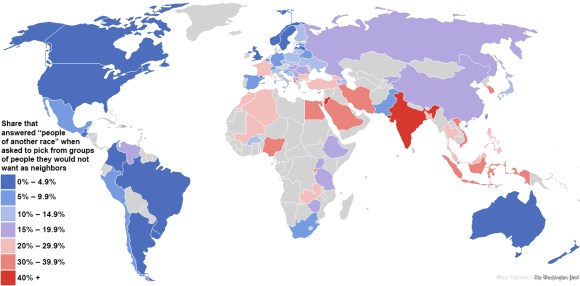
An interesting break down of “the most tolerant” countries. I don’t know how much stock to put into this data, but any data that makes Bangladesh look more tolerant, I’m willing to support!
Let’s All Watch Royal Baby News and Forget Our Problems!!
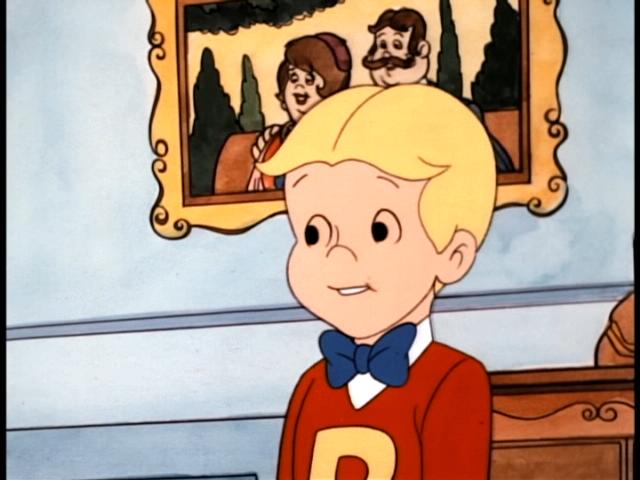
The recent media barrage of Royal baby news coupled with recent legislative measures removing funding for food stamps and education inspired me to write this post. In it I examine social mobility in the United States. Obviously we start off with a quote to make this diatribe seem “smarter”. John Rawls said, “If we ignore the inequalities in people’s prospects in life arising from these contingencies and let those inequalities work themselves out while failing to institute the regulations necessary to preserve background justice, we would not be taking seriously the idea of society as a fair system of co-operation between citizens as free and equal.” Rawls knew that society would encompass the haves and the have not’s, but he believed that a society that fails to champion the rights of the poor and lower class, would ultimately lead to a failed society. John Rawls further noted that life prospects are deeply influenced by contingencies of birth, including inborn talents, social class and luck. Several studies have been made comparing social mobility between developed countries. One such study (“Do Poor Children Become Poor Adults?”) found that of nine developed countries, the United States and United Kingdom had the lowest intergenerational vertical social mobility with about half of the advantages of having a parent with a high income passed on to the next generation. Today in the U.S., according the a recent New York Times report, 42% of men who are born in the poorest 5th percent stay there, while in the UK, only 30% stay there. As we fawn over the royal family and an aristocratic society, we fail to realize that we have fallen behind England in social mobility. (Note: The social mobility in England ranks among the worst in Europe) Our current financial models and laws worship big banks and the wealthy, because let’s be honest, the wealthy dictate legislation. Without the green paperbacks, nothing gets done in this city. As I learned in my Securities Regulation course, unless Goldman Sachs is behind your project, it is hard to succeed in this country. (Ok that’s a slight overgeneralization, but those bastards at Goldman have their fingerprints on everything!) The Economist recently published an article entitled “Rich Rewards”. The author wrote, “The people of Australia and Canada have twice the social mobility of their counterparts in America and Britain despite having Gini coefficients in the same ballpark.” America was once a beacon for hope and the American Dream. It was, and in some aspects, continues to be a place where hard work and determination can lead to prosperity. Although the foundation of America was built upon this dream, today Congress enacts legislation that directly conflicts with our founding ideals. Take food stamps for example. According to the Economist, “It is hard to argue that food-stamp recipients are undeserving. About half of them are children, and another 8% are elderly. Only 14% of food-stamp households have incomes above the poverty line; 41% have incomes of half that level or less, and 18% have no income at all. The average participating family has only $101 in savings or valuables.” Yet Congressional budget cuts have targeted the Food Stamp program. Next let us examine education. According to the Center on Budget and Policy Priorities, “States are spending $2,353 or 28 percent less per student on higher education, nationwide, in the current 2013 fiscal year than they did in 2008, when the recession hit.” So whom do you think these cuts affect the most? If you guessed middle to lower income families, then ding ding ding you’re correct! We continue to spend billions on Wall Street bailouts, sucking up to hedge funds managers, unnecessary wars, and tax cuts for the super wealthy. Further we continue to abandon the middle class and poor. I wish the Royal baby hoopla would have lead to some greater debate on this issue, but as usual the media only focused on artificial matters. I’ll end this post with a simple metaphor on how we should possibly think about remedying our current situation. Rawls wanted to find a way for societies to ensure that the financial privileges of one generation didn’t extend automatically into the next. He drew an analogy to the world of sport: “The draft rule in a professional sport such as basketball ranks teams in the opposite order from their standing in the league at the end of the season; championship teams go last in the draft of new players.”
 Z To A